Newmarket vs. Richmond Hill: A Tale of Two Strategies
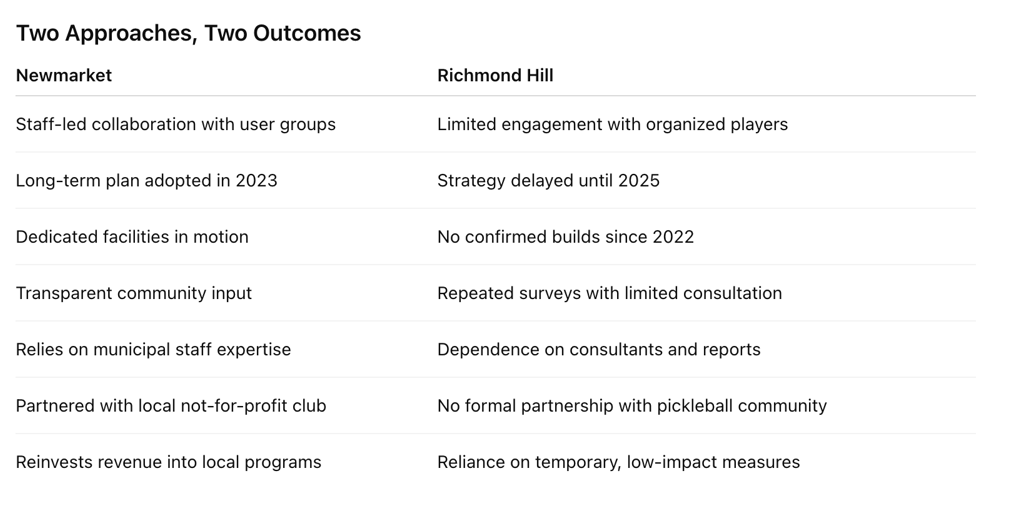
Newmarket and Richmond Hill offer a striking contrast in how cities approach pickleball growth. While Newmarket built a thriving pickleball hub through collaboration, planning, and community partnerships, Richmond Hill cancelled its 16-court facility in 2023 and delayed all progress citing the need for a combined Tennis and Pickleball Strategy. This report examines how one small town moved forward—and how another much larger City chose to avoid and delay and pass the responsibility onto the next Council, which will be elected in 2026.
PBAG
10/18/20254 min read

Newmarket vs. Richmond Hill: A Tale of Two Strategies
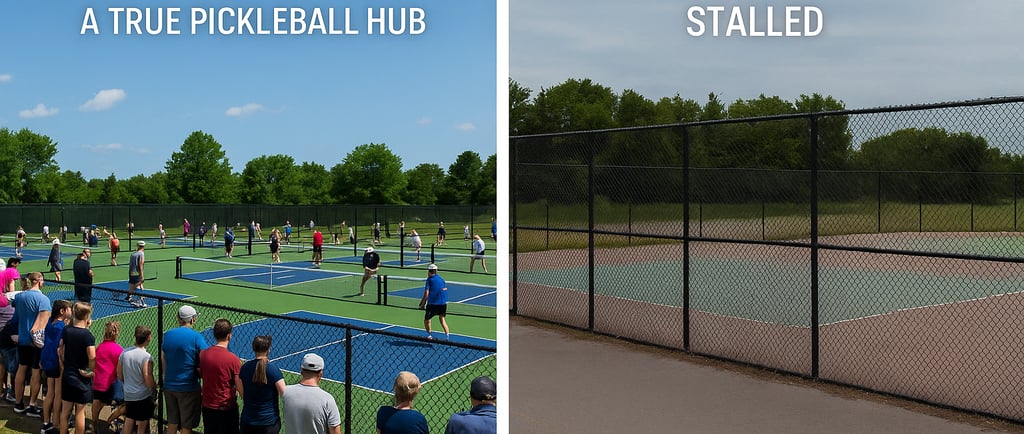
How One Town Built a True Pickleball Hub While Another Stalled
Across Canada, municipalities are under pressure to meet the exploding demand for pickleball. Too often, the response has been reactive — painting lines on tennis courts or shoehorning pickleball into facilities never designed for it.
But one community in York Region has shown what it looks like to get it right: Newmarket.
Meanwhile, Richmond Hill — once positioned to lead York Region in pickleball development — has deliberately stalled progress for more than five years.
Newmarket: A Model of Collaboration and Planning
Back in 2015, Newmarket’s Recreation Playbook recognized pickleball’s potential. The Town converted two tennis courts at Quaker Park into six dedicated pickleball courts — a small but visionary step that set the tone for what came next.
As interest in pickleball exploded across every age group, Newmarket responded with dual-lined courts at Joe Persechini Park and indoor gym access during the winter. But instead of stopping there, they understood these were temporary solutions.
In 2023, Newmarket’s staff released a forward-looking report titled Supporting the Growth of Pickleball, outlining a clear plan to meet future demand:
Converting Lions Park into a 12–14 court dedicated pickleball facility with a potential indoor bubble.
Partnering with the Newmarket Pickleball Club to operate the site.
Implementing a three-tier strategy for resurfacing, relining, and new builds.
Relying on municipal staff expertise and real community engagement, not costly consultants.
This partnership-based model has been the foundation of Newmarket’s success. The Town works with residents, not around them — ensuring programs, facilities, and investments align with what the community actually needs.
Richmond Hill: A Vision Delayed, Then Quietly Cancelled
In contrast, Richmond Hill took the opposite path.
In 2022, the City approved plans for 16 year-round pickleball courts at the David Dunlap Observatory Park (DDOP) — a project that could have made Richmond Hill a regional leader in the sport.
However, in 2023, the newly elected Council cancelled the project entirely, citing the need for a Tennis and Pickleball Strategy before moving forward. The problem? That strategy was not even initiated until spring 2025 — ironically, the same time the DDOP courts would have been opening.
The result has been three lost years of progress — and a growing sense of frustration among residents who still have nowhere to play.
A Pattern of Avoidance
While the City has added four new dedicated courts at Bayview Hill to complement the two existing courts at King's College Park, these courts are actively used, have long wait times, and are dominated by core user groups. The City has offered short-term “solutions” — like painting lines on tennis courts, opening arena floors for summer play, and promoting limited open drop-ins — these measures have done little to meet the real demand for pickleball and, more importantly, the need for year-round play. The Mayor claims there are budgeting issues but fails to explain the $100M sitting in reserve funds for parks. Newmarket, on the other hand, has fewer resources than Richmond Hill but manages to get it done.
Equally concerning is the lack of collaboration with organized user groups — the very people who have built the sport locally and understand its needs best. City staff have chosen to operate in isolation rather than partnership, a decision that has left them disconnected from the community they serve. It’s no surprise, then, that councillors now receive a steady stream of complaints from residents about the lack of courts and programs.
We attended a 2025 Council meeting and overheard a conversation between two senior City officials — the City’s CAO and Director of Parks — expressing skepticism toward community input. The officials reportedly suggested that feedback from the Richmond Hill pickleball community should be “discounted” because it included non-residents, and that staff should “develop their own model.”
Whether intentional or not, this mindset has created a clear divide between City leadership and the residents who play, coach, and organize pickleball daily. It helps explain why progress has been slow — and why trust between the community and City Hall has eroded.
Why It Matters
Pickleball isn’t just a recreational trend — it’s one of the most inclusive and health-promoting sports in Canada. It supports active living for seniors, youth, and families alike.
Newmarket recognized this early, planned strategically, and partnered with the community. Richmond Hill, on the other hand, has chosen to delay and re-study an issue that’s already been solved elsewhere.
The result? Newmarket is building courts and community, while Richmond Hill is building frustration.
A Way Forward
Richmond Hill can still change course — but it must start by rebuilding trust and involving its user groups in meaningful ways.
City staff should:
Engage directly with organized pickleball groups and players.
Prioritize dedicated facilities over temporary fixes.
Leverage local expertise instead of outsourcing to consultants.
Set transparent timelines and publish regular progress updates.
If Richmond Hill wants to lead, it must recognize what Newmarket already knows: successful recreation planning comes from collaboration, not control.
Conclusion
Newmarket’s success story proves that progress doesn’t require endless studies or consultants — it requires listening, collaboration, and action. Richmond Hill had that opportunity and walked away from it. But it’s not too late to reverse course.
The City can still deliver what residents have been asking for: a true pickleball hub, built through partnership, transparency, and shared vision.
Until that happens, Richmond Hill’s story will remain one of missed opportunities — while Newmarket continues to lead the way.